Where Do Old Quebec Residents Go When the Tourist Season Overwhelms the Core?

Why does living in a UNESCO district feel different in July?
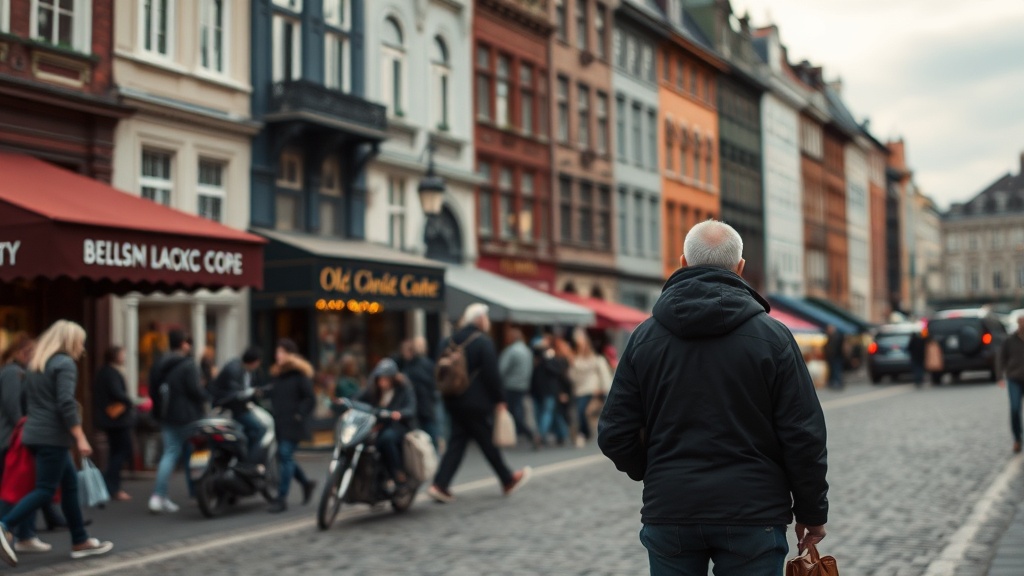
If you've lived in Old Quebec for more than a year, you already know—the rhythm of our neighbourhood shifts dramatically when the cruise ships arrive. One day you're walking down Rue Saint-Jean to pick up prescription refills, the next you're shoulder-to-shoulder with visitors clutching guidebooks and debating whether to try poutine. For those of us who call this historic peninsula home, tourist season isn't a vacation mindset—it's a practical reality that reshapes how we move through our own streets. The question isn't whether to love our UNESCO designation (we do), but how to maintain normal life when the population triples and the cobblestones fill with cameras.
Old Quebec's living conditions create unique challenges you won't find in Sainte-Foy or Limoilou. Our narrow 17th-century streets weren't designed for modern delivery trucks, our parking is perpetually scarce, and our grocery runs become strategic missions when tour buses block access to Place d'Youville. Yet there's a reason we stay—this community has developed remarkable systems for preserving daily life amid the spectacle. We've learned which staircases bypass the heaviest foot traffic, which hours guarantee quiet pharmacy visits, and how to access municipal services without crossing paths with guided groups.
What follows isn't tourism advice—it's intelligence gathered from property owners, longtime renters, shopkeepers, and municipal workers who navigate Old Quebec year-round. Consider this your resident's handbook for maintaining sanity (and efficiency) when the world arrives at our fortified doorstep.
Which side streets offer the fastest escapes during peak congestion?
Every Old Quebec resident eventually develops their own evacuation routes—those lesser-known paths that connect the Upper Town to the Lower Town without requiring you to swim upstream through crowds on Rue du Petit Champlain. The key is understanding the topography that most visitors don't: our neighbourhood is built on two levels with multiple vertical connections, not just the famous Funicular that tourists queue for.
Escalier Casse-Cou (Breakneck Stairs) offers one alternative—yes, it's steep, but tourists rarely venture past the first landing, and locals know the mid-point exit leads directly to residential blocks on Rue Sous-le-Fort. During cruise ship days, this route cuts fifteen minutes off a walk to the Lower Town's service businesses. The Prescott Staircase near the Parc de l'Artillerie provides another locals-only corridor—connecting Avenue Saint-Denis to Rue Saint-Pierre while bypassing the Terrasse Dufferin entirely.
For Upper Town residents needing to reach the Saint-Roch commercial district, the Route de la Côte de la Montagne remains surprisingly underutilized by pedestrians—most visitors don't realize it's walkable, assuming it's strictly vehicular. We've timed it: walking from Hôtel du Parlement to Boulevard Charest via this route takes eleven minutes during peak season, compared to twenty-three minutes fighting through Place Royale.
The municipal government has quietly improved several of these corridors based on resident feedback. The Ville de Québec publishes seasonal pedestrian flow maps that locals can access to plan routes around cruise ship schedules—not that most of us need maps anymore after a few summers of instinctive navigation.
Where can residents handle errands without joining the visitor queues?
Service accessibility separates Old Quebec residents from tourists in ways that aren't immediately obvious. When you live here, you notice the patterns: the pharmacy on Côte de la Fabrique that implements a residents-only express line during summer afternoons, the postal outlet on Rue Saint-Stanislas that keeps separate hours for package pickup, the bank branch on Rue De Buade that schedules appointment slots away from tourist banking hours.
The Bibliothèque Claire-Martin on Rue Saint-Stanislas remains one of the most reliably quiet public spaces in the Upper Town—not because tourists aren't welcome, but because most don't venture beyond the main commercial arteries. Residents use this branch for internet access, document printing, and periodical reading during periods when home offices feel too isolated. The library's online reservation system allows holds that skip the browsing crowds entirely.
For postal and shipping needs, the Postes Canada outlet at Place D'Youville implements a separate queue system for box holders versus retail customers—a distinction that matters when you're retrieving registered mail and don't want to wait behind twenty people buying stamps for postcards. The staff know the regulars, and regulars know to arrive before 10 AM or after 4 PM when tour group volume drops.
Medical services present their own seasonal logistics. The CLSC du Vieux-Québec on Rue Saint-Olivier adjusts appointment scheduling during high season to accommodate residents who struggle to reach the facility through congested streets. Their phone system now includes automated updates about street accessibility—a small but meaningful adaptation to our living conditions. For pharmacy needs, the Jean Coutu on Avenue Cartier (technically just outside our district boundary) remains the unofficial resident preference when the Saint-Jean location becomes impassable.
How do locals access grocery essentials when the main arteries clog?
Food shopping in Old Quebec requires tactical planning that suburban residents never consider. The IGA Extra on Rue Saint-Jean serves as our primary grocery resource, but the experience differs dramatically between 8 AM Tuesday and 2 PM Saturday in August. Residents develop elaborate timing systems—some preferring 7 AM opening runs, others waiting for the 8 PM post-dinner lull when cruise passengers have returned to their ships.
What many newcomers don't realize is the Marché du Vieux-Port—located just outside the fortified walls on Boulevard Champlain—offers not just tourist-oriented specialty items but genuine weekly produce shopping for residents. The market's vendor directory includes butchers, fishmongers, and dairy producers who serve the same local clientele week after week. The market's layout includes a residents' parking validation system—present your address proof at the information desk for reduced hourly rates.
For emergency provisions without the Saint-Jean crowds, several dépanneurs on side streets maintain surprisingly comprehensive stock. The dep on Rue Garneau near Université Laval's Old Quebec campus caters specifically to the student and faculty population, carrying staples that tourists rarely seek. Similarly, the convenience store at the corner of Rue d'Aiguillon and Avenue Honoré-Mercier operates on resident-oriented hours—opening early and closing late to accommodate work schedules rather than tourist foot traffic.
Delivery services have adapted to our constraints. Most grocery delivery drivers now know to use the Porte Saint-Jean entrance rather than attempting navigation through the pedestrian-heavy Rue du Fort corridor. When ordering online, residents have learned to include specific delivery instructions referencing these gateway access points—small details that prevent drivers from circling our one-way maze for twenty minutes.
What municipal resources help residents maintain normalcy?
The arrondissement de La Cité-Limoilou manages Old Quebec with a recognition that 3,500 permanent residents share space with millions of annual visitors. This awareness manifests in specific services: the residents' parking permit system that reserves street spaces in designated zones, the seasonal waste collection adjustments that account for tourist-generated volume, and the noise ordinance enforcement that maintains reasonable quiet hours despite 24-hour hospitality operations.
The Accès Vieux-Québec program provides residents with RFID-enabled cards that open certain pedestrian zones to residents during restricted hours—technically a traffic management tool, but practically a quality-of-life essential when you need to reach your building with groceries during a street festival. Applications are processed through the arrondissement office on Rue des Jardins, where staff actually understand the difference between resident needs and visitor inquiries.
Winter maintenance deserves special mention because Old Quebec's infrastructure challenges intensify with snow. The municipality prioritizes residential staircases and access points differently than tourist corridors—the escaliers du Faubourg and passages between Rue Saint-Jean and Avenue Honoré-Mercier receive pre-dawn clearing because residents use them for daily commuting, not because they appear on visitor itineraries.
For dispute resolution—whether noise complaints, parking enforcement challenges, or property access issues—the arrondissement maintains a liaison résident program. This designated contact person (reachable through the main municipal switchboard) specifically handles resident concerns that get lost in the tourism-focused feedback systems. It's not advertised prominently—residents learn about it through neighbourhood associations or word of mouth.
How do community organizations preserve resident voice?
Old Quebec's civic life depends on organizations that advocate specifically for resident interests. The Regroupement des propriétaires et locataires du Vieux-Québec meets monthly at the Maison de la littérature on Rue Notre-Dame—agendas consistently address practical concerns like delivery access, waste management timing, and the balance between commercial vibrancy and residential tranquillity. These aren't abstract discussions; they result in concrete policy recommendations to the arrondissement council.
The Société historique de Québec offers resident memberships that include more than historical content—they provide networking opportunities with property owners who've navigated heritage building maintenance, a significant concern when you live in structures requiring ministry approval for exterior modifications. The society's archives on Rue Saint-Stanislas also house documentation that helps residents understand their buildings' histories—a surprisingly practical resource when dealing with contractors unfamiliar with 18th-century construction.
Seasonal transitions bring community-organized events specifically for residents. The autumn Rentrée des résidents gathering—held after cruise season ends—reconnects neighbours who've spent summer navigating around each other rather than socializing. Winter brings the Corridors patrimoniaux walking groups, organized by local historians but attended primarily by residents rediscovering their own neighbourhood without tourist density.
These organizations matter because they maintain institutional memory. When municipal proposals threaten resident parking or building access, these groups recall previous negotiations and precedent. They know which councillors respond to resident pressure, which developers have historically respected community input, and how to navigate the bureaucracy that manages our UNESCO designation. For newcomers to Old Quebec—whether recent arrivals or long-time renters finally engaging—participation provides immediate practical benefits alongside civic connection.
Living in Old Quebec means accepting that your neighbourhood belongs to the world, but the world doesn't determine your daily experience. The systems we've built—informal route knowledge, resident-specific services, community organization—preserve normal life within an extraordinary setting. Summer crowds don't disappear, but they become navigable, predictable, occasionally even background noise. The same walls that attract millions also define our territory; we've simply learned which gates to use, which hours to keep, and which neighbours to call when the tourists overwhelm the cobblestones. That's not mastering anything—it's just living here, season after season, making the old stones work for the people who stayed.