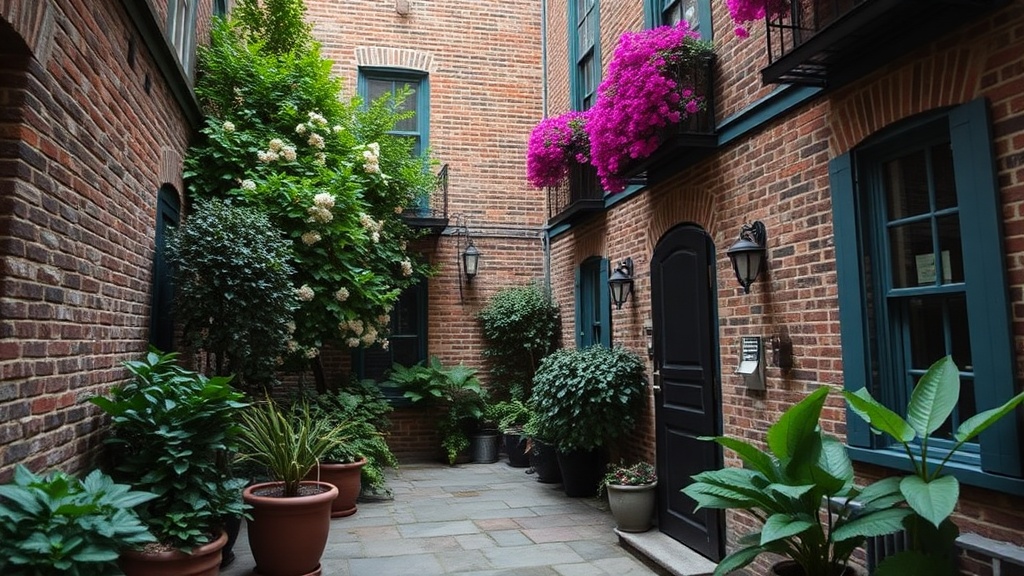
Hidden Courtyards and Secret Gardens of Old Quebec

This post identifies the specific, often overlooked courtyards and private gardens tucked behind the stone walls of Old Quebec (Vieux-Québec). You will learn exactly where to find these secluded green spaces, how to access them, and which ones are open to the public versus those that require a private tour or a reservation. Finding these spots allows you to escape the heavy crowds of Rue du Petit-Champlain and find actual quiet in the city.
Most tourists spend their entire time on the main thoroughfares. They walk the walls of the UNESCO World Heritage sites without ever looking through the iron gates. That's a mistake. The real soul of the city isn't on the sidewalk; it's in the inner sanctums of the old manor houses and stone buildings.
Where Can You Find Secret Gardens in Old Quebec?
You can find the most striking secret gardens by looking for open iron gates near the intersections of Rue Sainte-Anne and Rue Saint-Louis. While many courtyards are strictly private, several are accessible through museums, boutique hotels, or public pathways that feel entirely secluded.
One of my personal favorites is the area around the Petit Champlain district, but not the main street itself. If you duck into the side alleys near the Place Royale, you'll find small, stone-walled pockets that feel like 17th-century France. These aren't always "gardens" in the sense of a massive park, but they are curated spaces with potted plants, climbing ivy, and stone benches.
The Jardins de la Plaine offer a different vibe. It's more of an open green space, but the way the architecture of the walls wraps around it makes it feel much more intimate than a standard city park. If you want something truly hidden, look for the courtyard of the Manoir Saint-Antoine area. It’s a small, quiet corner that most people walk right past because they're too busy looking at their phones or the souvenir shops.
Here are a few specific types of spaces you'll encounter:
- Hotel Courtyards: High-end spots like the Auberge Saint-Antoine often have incredibly tasteful, quiet entryways.
- Museum Gardens: The Musée de la civilisation has outdoor areas that are much more peaceful than the street level.
- Church Side-Alleys: The areas surrounding the Basilica of the Assumption have small, stone-walled niches that are perfect for a quick breather.
Keep an eye out for the small signs. Sometimes, a tiny brass plaque will indicate if a space is open to the public during certain hours. Don't be afraid to look—if a gate is slightly ajar, there's a good chance it's a public thoroughfare.
How Much Does It Cost to Visit Private Courtyards?
Access to most secret courtyards in Old Quebec is either free via public alleys or requires a small fee if the space is part of a museum or a guided tour. Most of the "hidden" spots you'll find by wandering are completely free to view from the entrance.
If you want to see the more manicured, professional gardens, you'll likely have to pay an admission fee for a museum or a historic site. For example, visiting the Centre d'interprétation des sites archéologiques de Québec might involve a ticket price, but it grants you access to much more structured and historically significant spaces.
| Type of Space | Typical Cost | Best Time to Visit |
|---|---|---|
| Public Alleys/Courtyards | Free | Early Morning |
| Hotel Entrances | Free (with purchase) | Late Afternoon |
| Museum Gardens | $15 - $25 | Mid-week |
| Guided Historical Tours | $20 - $40 | Sunset |
If you're on a budget, stick to the side streets of the Upper Town. The architecture there creates natural "rooms" that feel like private gardens without costing a cent. I've spent hours just sitting on stone steps in these little alcoves. It's the best way to people-watch without actually being in the middle of the crowd.
The catch is that these spaces can be quite narrow. If you're traveling with a large group or a stroller, some of these "secret" spots might be a bit of a squeeze. I'd recommend a solo walk or a date night for these locations.
What Should You Bring When Exploring Hidden Spaces?
You should bring a camera with a decent zoom lens and a comfortable pair of walking shoes. Because these spaces are often tucked away in narrow alleys, you'll be doing a lot of uneven walking on cobblestones and stone stairs.
The weather in Quebec can change in a heartbeat. Even if you see blue skies, a light wind can whip through these narrow stone corridors, making them feel much colder than the open streets. I never leave my apartment without a light layer—something like a Patagonia Torrentshell jacket—even in the shoulder seasons. The stone walls hold the chill.
Also, consider the lighting. If you're looking for that perfect shot of a hidden ivy-covered wall, the light in these narrow passages is tricky. It's either very bright or very dark. Avoid the midday sun if you want to avoid harsh shadows. Instead, aim for the "golden hour" or the soft light of an overcast morning.
A few things to keep in mind:
- Footwear: Leave the heels at home. Cobblestones are unforgiving, especially in a tight courtyard.
- Battery: Your phone battery will drain faster if you're constantly searching for a signal in these narrow, stone-walled canyons.
- Respect: Many of these gardens are technically private property. If you see a "Private" sign, don't linger too long.
The local culture is very respectful of privacy. If you find a beautiful garden that belongs to a residence, take your photo from the street and move on. Most locals don't mind a quick glance, but lingering in a private courtyard can be seen as a bit intrusive.
I've found that the best way to discover these places is to simply walk "wrong." Instead of following the crowds toward the main landmarks, turn down the smallest, most nondescript street you see. If a street looks like it leads to a dead end, it might actually lead to a beautiful, quiet courtyard. This is how I found my favorite reading spot near the Citadelle.
It's a different way of experiencing the city. You're not just a tourist checking boxes; you're an observer of the details. The way the moss grows on the stone, the way a single flower pot sits on a windowsill—these are the things that make Old Quebec feel alive. It's a quiet, rhythmic beauty that you'll miss if you're only looking at the big monuments.
The next time you feel overwhelmed by the noise of the souvenir shops and the tour groups, look for the gap in the stone. Look for the small, wooden door. That's where the real magic is happening.